Poland’s Betting Tax Reshapes European Sportsbook Landscape
The 12% Revenue Tax That Changed Everything
When Poland implemented its 12% turnover tax on betting operators in 2017, few predicted the seismic shift it would create across European sportsbook markets. This wasn’t just another regulatory tweak—it fundamentally altered how operators approach bonus structures, market positioning, and customer acquisition strategies throughout the continent.
The Polish model has become a case study in unintended consequences. While designed to boost government revenues and regulate the market, the tax has inadvertently created a two-tier system where international operators must choose between compliance costs and competitive positioning. 22Bet exemplifies this challenge, having restructured its Polish operations to maintain competitive bonus offerings while absorbing the substantial tax burden.
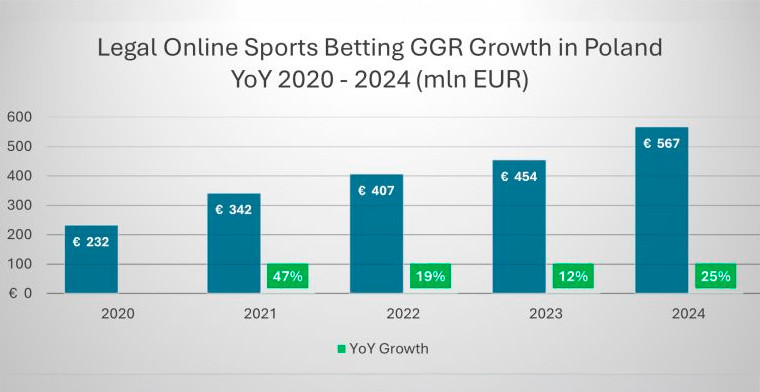
Recent data from the Polish Gaming Authority shows that licensed operators generated €2.3 billion in gross gaming revenue in 2025, with tax contributions reaching €276 million—a 18% increase from the previous year. This growth masks the underlying tension between profitability and market share that continues to define Poland’s betting landscape.
Bonus Wars in the Shadow of Heavy Taxation
The most visible impact of Poland’s betting tax appears in the dramatic evolution of welcome bonuses and promotional strategies. Operators face a brutal mathematical reality: every promotional euro costs them 1.12 euros when factoring in the turnover tax. This has forced a complete reimagining of customer acquisition models.
Traditional deposit match bonuses, once reaching 200% or higher, have largely disappeared from the Polish market. Instead, operators have pivoted toward risk-free bet structures and cashback programs that minimize tax exposure while maintaining customer appeal. Industry analysis reveals that average welcome bonus values in Poland decreased by 34% between 2022 and 2025, even as competition intensified.
“The Polish tax structure has essentially eliminated the bonus arms race we see in other European markets,” explains Maria Kowalski, Senior Gaming Analyst at Warsaw-based research firm Baltic Gaming Intelligence. “Operators are now competing on operational efficiency and customer experience rather than pure promotional value.”
This shift has created unexpected winners and losers. Smaller operators with lean cost structures can now compete more effectively against well-funded international brands, while established players struggle to justify their traditional high-volume, low-margin acquisition strategies.
The Cross-Border Bonus Migration Effect
Perhaps the most fascinating development has been the emergence of what industry insiders call “bonus tourism.” Polish bettors increasingly seek accounts with operators licensed in neighboring countries, particularly those offering more generous promotional terms without the burden of Poland’s turnover tax.
Data from online traffic analytics firm GamingMetrics indicates that 23% of Polish IP addresses now regularly access sportsbooks licensed in Malta, Gibraltar, or Curacao. This represents a 67% increase since 2023, suggesting that tax-driven bonus restrictions are pushing customers toward unregulated alternatives.
The irony is palpable: a tax designed to capture more revenue from betting activities may be driving significant volume offshore. Lithuanian operator statistics show a 41% increase in Polish customer registrations over the past two years, with bonus generosity cited as the primary attraction factor.
VIP Programs: The New Competitive Battleground
With traditional welcome bonuses constrained by tax implications, Polish operators have shifted focus toward VIP loyalty programs and long-term customer value optimization. These programs operate in a regulatory gray area where ongoing benefits can be structured to minimize direct tax impact while maximizing customer retention.
The sophistication of these programs has increased dramatically. Leading operators now employ machine learning algorithms to personalize VIP benefits, offering everything from exclusive betting lines to experiential rewards that fall outside traditional gaming taxation. One major operator reports that VIP customer lifetime value in Poland exceeds the European average by 28%, despite lower initial bonus offerings.
Cashback structures have become particularly innovative. Rather than traditional percentage-based returns on losses, operators now offer tiered systems based on betting frequency, sport selection, and account longevity. These complex structures allow operators to maintain competitive appeal while spreading tax obligations across longer timeframes.
Market Consolidation and the Survival of the Fittest
The sustained pressure of Poland’s betting tax has accelerated market consolidation in ways that surprised even seasoned industry observers. Smaller operators lacking the capital reserves to absorb prolonged tax burdens have either exited the market or sought acquisition by larger competitors with deeper pockets.
Since 2023, the number of active Polish betting licenses has decreased by 19%, from 47 to 38 operators. However, this consolidation hasn’t reduced competition—it has intensified it among the survivors. The remaining operators command larger market shares and possess the resources necessary for sustained promotional campaigns despite tax headwinds.
“We’re witnessing a Darwinian evolution in the Polish market,” notes Dr. Tomasz Nowak, Professor of Gaming Economics at the University of Warsaw. “Only operators with truly sustainable business models and significant capital backing can thrive under this tax regime. The result is a more mature, albeit smaller, competitive landscape.”
This consolidation has had unexpected benefits for consumers. Surviving operators invest more heavily in technology, customer service, and product innovation to differentiate themselves in a market where price competition through bonuses has become economically unfeasible.
Technology Innovation Born from Tax Necessity
Necessity has proven to be the mother of invention in Poland’s constrained betting market. Operators have invested heavily in technology solutions that maximize customer value while minimizing tax exposure. Advanced risk management systems now enable more precise bonus targeting, ensuring promotional spending generates maximum customer acquisition and retention impact.
Artificial intelligence applications have proliferated throughout the Polish market. Predictive analytics help operators identify high-value customers earlier in their lifecycle, allowing for more strategic bonus allocation. Real-time behavioral analysis enables dynamic promotional adjustments that respond to individual customer preferences and betting patterns.
Mobile-first strategies have become essential. With desktop betting declining across all demographics, operators focus resources on creating superior mobile experiences that justify premium pricing despite limited promotional flexibility. App-exclusive features, including augmented reality betting interfaces and social gaming elements, help differentiate offerings in ways that transcend traditional bonus competition.
The Ripple Effect Across European Markets
Poland’s betting tax experiment hasn’t occurred in isolation—its effects are reverberating throughout European gambling markets as other governments consider similar revenue-generation strategies. France has proposed a modified turnover tax, while Germany continues to evaluate various taxation models for its newly regulated sports betting market.
Operators are now factoring Polish learnings into their broader European strategies. The ability to maintain market share and profitability under heavy taxation has become a key competitive advantage as regulatory environments tighten continent-wide. Companies that have successfully navigated Poland’s challenges find themselves better positioned for similar developments elsewhere.
The European Gaming Association reports that operator profit margins in heavily taxed markets have stabilized at levels 15-20% below historical averages, but customer acquisition costs have decreased by nearly 30%. This suggests that sustainable business models are emerging despite initial concerns about market viability under high taxation.
Future Implications for Global Betting Markets
As Poland’s betting tax approaches its seventh year of implementation, the long-term implications for global sports betting markets are becoming clearer. The Polish model demonstrates that operators can maintain competitive markets even under significant tax burdens, provided they adapt their strategies accordingly.
The shift away from bonus-driven competition toward operational excellence and customer experience innovation may represent the future of mature betting markets worldwide. As regulatory frameworks tighten globally, the Polish experience offers valuable lessons about sustainable business model evolution under fiscal pressure.
Looking ahead to 2026 and beyond, Poland’s betting market appears to have found a new equilibrium. While tax revenues continue growing and operators maintain profitability, the real winners may be consumers who benefit from improved services and more responsible promotional practices. The question remains whether other markets will voluntarily adopt similar approaches or wait for regulatory pressure to force similar evolution.